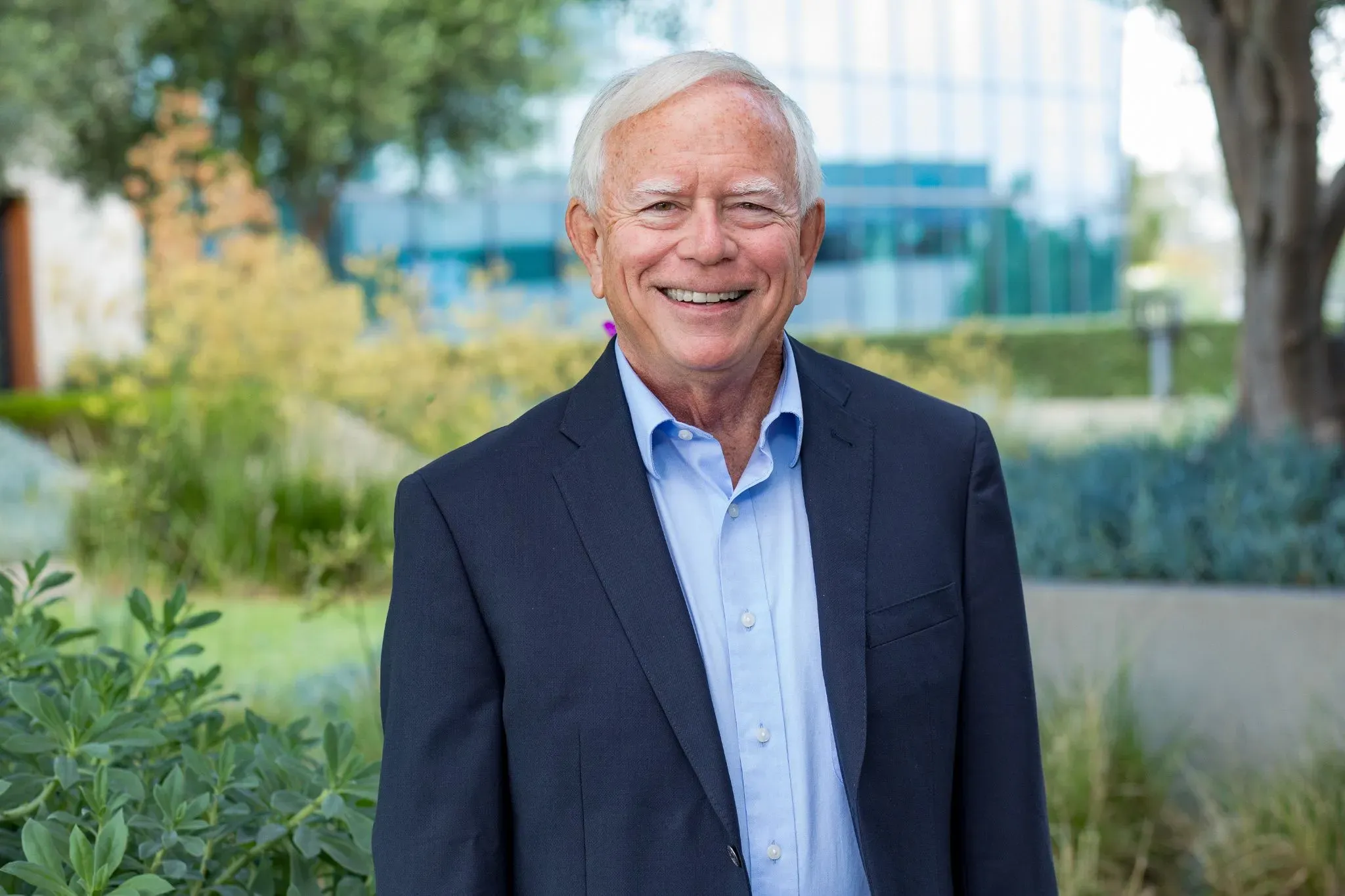
Transforming Education with AI Expertise
With a bachelors from Stanford and a PhD from MIT, Dr. William Swartout brings over 50 years of award-winning AI research to revolutionize education through innovative AI solutions. Partner with a seasoned expert to unlock new possibilities in learning and teaching. Explore how advanced AI can empower educators and students alike.
Recent AI Enhanced Education Projects
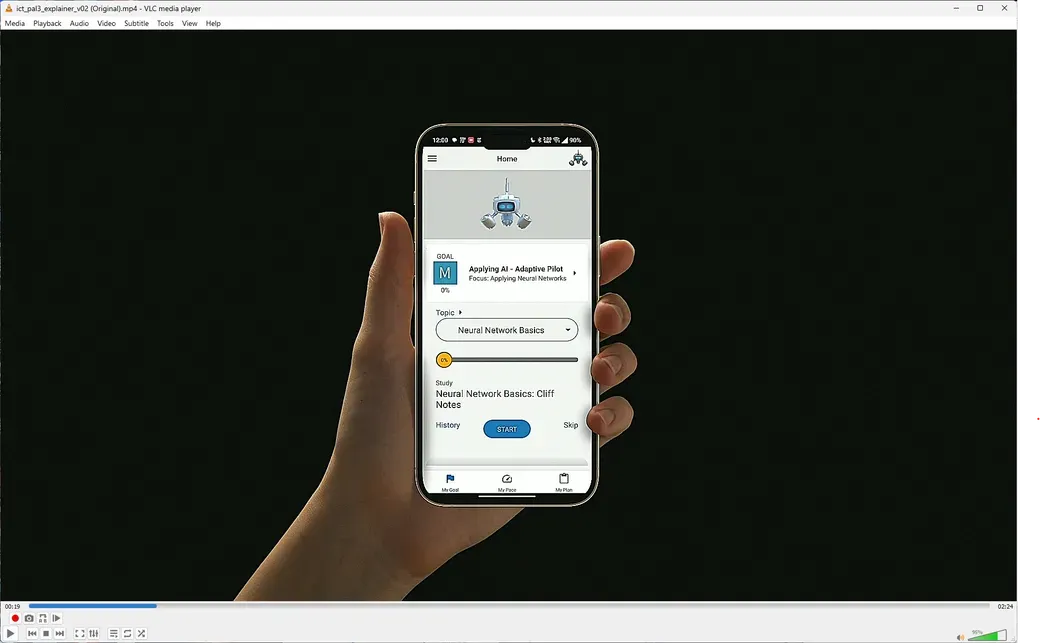
PAL3: Personal Assistant for Lifelong Learning
PAL3 is an AI-powered learning coach that adapts to each student’s goals and background, delivering the right content anytime, anywhere—straight to their phone or web browser.

ABE/AWE: Generative AI Writing Tools
ABE is a Generative AI writing tool that sharpens—rather than replaces—students’ critical thinking. Used in USC’s undergraduate writing program, it also powers AWE, a version tailored for Army writing.
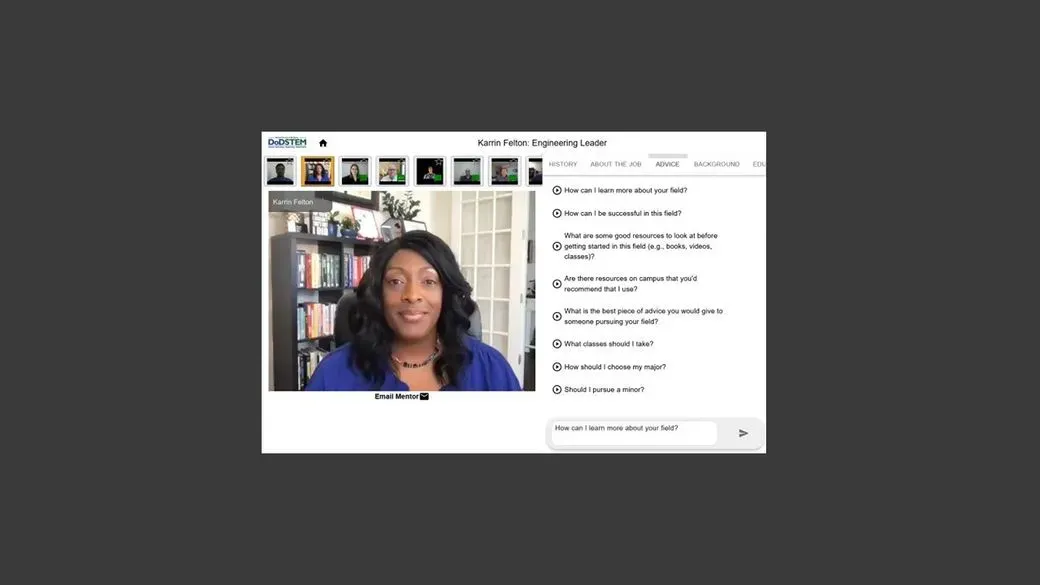
MentorPAL
Deciding on and starting a new career can be daunting, and mentors—who help navigate challenges and inspire growth—aren’t always available. MentorPAL bridges that gap by recording real mentors’ wisdom and using AI to bring their guidance to students anytime they ask.
Recent News
USC President's AI Strategy Committee
I was recently asked to serve on the USC President's AI Strategy Committee that will be looking at, among other things, how AI is impacting education broadly at the university, and how we can use AI to enhance students' educational experiences and better prepare them for the jobs of the 21st century.
Biography
With more than 50 years in AI research — beginning with his undergraduate work at Stanford and PhD at MIT — William Swartout brings deep historical perspective to this moment in the field. That career has been centered at USC, where he has spent 45 years, most recently as Chief Science Officer of the USC Institute for Creative Technologies (ICT), Professor Emeritus of Computer Science Research at the Viterbi School of Engineering, and co-Director of the Center for Generative AI and Society. Today, Swartout is deeply engaged in one of the most pressing questions in education: how generative AI can be integrated into curricula in ways that enhance students' critical thinking rather than replace it.
In 2009, he received the Robert Engelmore Award from the Association for the Advancement of Artificial Intelligence (AAAI) for seminal contributions to knowledge-based systems and explanation, groundbreaking research on virtual human technologies and their applications, and outstanding service to the AI community. A Fellow of the AAAI, he has served on the AAAI Board of Councilors and is past chair of the Special Interest Group on Artificial Intelligence (SIGART) of the Association for Computing Machinery (ACM).
Swartout has advised at the highest levels of government and defense, serving on the Air Force Scientific Advisory Board, the Board on Army Science and Technology of the National Academies, and the JFCOM Transformation Advisory Group — a high-level body whose members included Senator Hillary Clinton and Speaker Newt Gingrich. Prior to co-founding the ICT in 1999, he served as Director of the Intelligent Systems Division at the USC Information Sciences Institute.
His project leadership at the ICT has produced work of lasting significance. The Mission Rehearsal Exercise earned awards for outstanding innovation in modeling and simulation from the National Training and Simulation Association and first place for innovative application of agent technology at the 2001 International Conference on Autonomous Agents. An NSF-funded museum guides project brought ICT virtual humans to the Museum of Science, Boston, where more than 250,000 visitors engaged with the technology; it was subsequently selected for exhibition at the 2010 AAAS conference and the 2012 USA Science and Engineering Festival in Washington, DC. As Principal Investigator for the New Dimensions in Testimony project, Swartout helped develop a conversational format for preserving Holocaust survivor stories for future generations — work featured on the NBC Today Show and 60 Minutes.
More recently, he led the ONR-funded Personal Assistant for Lifelong Learning project, which developed an AI-based learning coach to support service members through career transitions and address knowledge decay. He also helped establish the AI Research Center of Excellence for Education at the ICT, which creates AI-based applications designed to make teachers more effective and students more capable learners. A central focus of the Center is using AI to teach AI — building the AI literacy needed to prepare the workforce for a rapidly evolving economy.